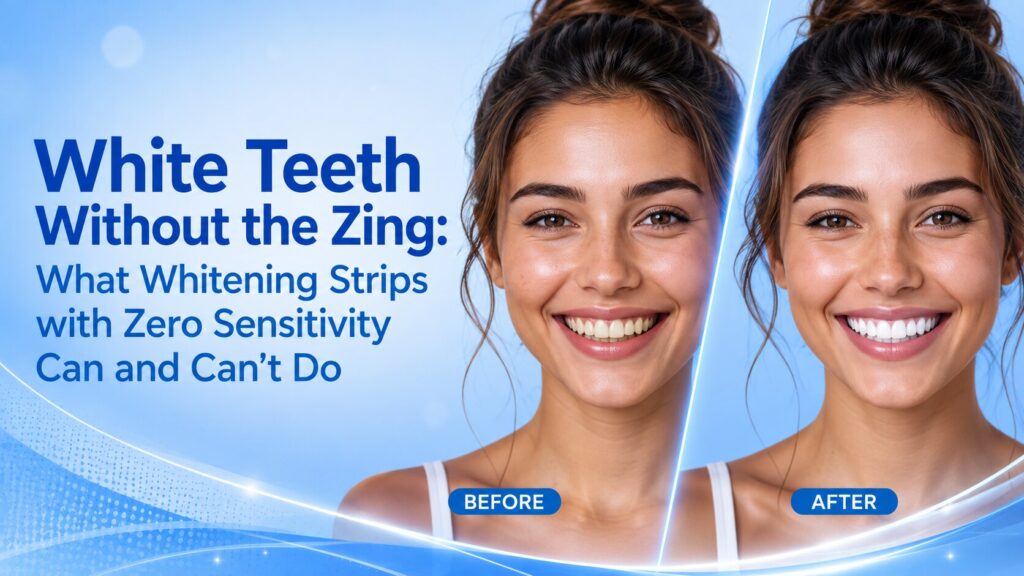
You want a brighter smile, but previous whitening products may have left your teeth with an unpleasant sharp zing. That experience can make trying another product feel like a gamble. Can whitening strips with zero sensitivity really brighten your smile without discomfort?
The answer depends on the whitening ingredients, formula, application and type of staining. A non-peroxide approach can offer a gentler alternative for people concerned about sensitivity.
EverBlanc is designed around this idea, with gradual whitening that fits easily into a regular smile care routine. It can also suit coffee drinkers who want to manage everyday staining. This guide explains what whitening strips can achieve, where they have limits and what to consider before buying.
What Does “Zero Sensitivity” Actually Mean?
Why Whitening Can Make Teeth Feel Sensitive
Some whitening products use peroxide to break down stains. For some people, this can cause temporary sensitivity during or after treatment.
That reaction doesn’t mean the product is working better. Existing dental problems can also cause sensitivity. Decay, cracked teeth, gum problems and exposed dentine can all cause discomfort. These issues should be checked before starting any whitening routine.
A gentle on enamel approach may appeal if comfort is your main concern. However, no whitening product should replace proper dental care.
Does Zero Sensitivity Mean Zero Whitening Power?
A gentler formula doesn’t automatically mean weaker whitening. The active ingredients, formula and contact time all influence results.
Non-peroxide whitening from Everblanc can provide another option for people who want to avoid peroxide-based products. The focus is usually on gradual improvement rather than an aggressive colour change.
Results still vary between users. Your natural tooth shade, staining and consistency can all affect the final result.
What Can Whitening Strips with Zero Sensitivity Actually Do?
Lift Common Surface Stains
Coffee, tea, red wine and strongly coloured foods can gradually leave natural teeth looking duller. That’s particularly relevant for regular coffee drinkers. Daily coffee doesn’t have to mean abandoning your favourite drink while working towards a brighter smile.
Whitening strips can help reduce certain surface stains over time. They don’t necessarily change the natural colour of your teeth dramatically.
This distinction matters when shopping for an at-home whitening product. Surface staining may respond better than deeper discolouration.
Brighten Your Smile Gradually
Gradual whitening can be useful when you want a brighter smile without an intense treatment routine. Following the product instructions consistently gives the formula the best chance to work as intended. Using strips more often won’t automatically produce better results.
A non-peroxide option can also make whitening feel easier to include in your routine. This approach may suit people who have previously avoided whitening because of sensitivity.
When comparing the best whitening strips for sensitive teeth, consider comfort alongside the expected whitening results. Long-term maintenance matters too. Good oral hygiene and sensible stain management can help you keep your smile looking brighter.
What They Can’t Fix, No Matter How Long You Use Them
Deep or Internal Discolouration
Not every stain sits on the outer tooth surface. Ageing, certain medicines and dental trauma can cause deeper discolouration.
Whitening strips may have limited results against these types of stains. Applying more strips isn’t necessarily the answer.
A dentist can help identify the cause of deeper staining. They can also recommend a more suitable treatment when strips aren’t enough.
Fillings, Crowns and Veneers
Whitening products mainly affect natural tooth structure. Fillings, crowns and veneers may not lighten in the same way.
This can create uneven staining or colour differences after whitening. Natural teeth may become brighter while existing dental work stays the same shade.
If visible restorations are part of your smile, consider professional advice before starting treatment.
Existing Dental Problems
Whitening isn’t designed to treat decay, gum problems or damaged teeth.
If your teeth are painful or unusually sensitive, find out why first. Treating an underlying problem should come before cosmetic whitening.
Once your teeth are healthy, you can decide whether a gradual whitening routine suits you.
How to Choose Whitening Strips If Sensitivity Is Your Main Concern
If sensitivity is your biggest concern, don’t choose a product based only on its headline claim. Look at the ingredients, instructions and expected results before buying whitening strips with zero sensitivity.
Check the Active Ingredients
Clear ingredient information makes it easier to compare whitening products. Look for details about the active whitening ingredients rather than vague claims.
Non-peroxide whitening can be an appealing option when you want to avoid peroxide-based formulas. It can also support a gentler approach to everyday whitening. If enamel care matters to you, check whether the product is described as enamel safe and review its usage instructions.
Look at the Formula and Instructions
Check how long the strips should remain on your teeth. Also check how often the product should be used.
Don’t leave strips on longer to chase faster results. Don’t add extra applications without guidance either.
Following the instructions is especially important when you’re concerned about sensitivity. A gradual routine can be easier to maintain over time.
Don’t Buy on “Whiter, Faster” Alone
A product promising dramatic results can sound tempting. However, speed isn’t the only factor worth considering.
Think about comfort, ingredients, convenience and long-term maintenance. The best choice should fit your expectations and daily routine.
People looking for whiter smiles with zero sensitivity may prefer a gradual approach that doesn’t encourage overuse.
Are Zero-Sensitivity Whitening Strips Worth Buying?
They can be worth considering when surface staining is your main concern. They’re also useful if you want a convenient at-home routine.
A non-peroxide formula may suit people who prioritise comfort. Gradual whitening can also make maintenance easier over time.
They may be worth considering if:
- You mainly have surface stains.
- You want non-peroxide whitening.
- You prefer gradual results.
- You regularly drink coffee.
- You want a simple maintenance routine.
- You want an option designed to be gentle on enamel.
Think twice if:
- You expect dramatic whitening immediately.
- You have several visible restorations.
- Your sensitivity has no clear cause.
- You have untreated dental problems.
- Your staining appears deeper than surface discolouration.
Realistic expectations matter. A whitening routine should improve the appearance of natural teeth without encouraging excessive use.
A Whiter Smile Shouldn’t Require Gritting Your Teeth
Whitening strips with zero sensitivity offer a gentler approach to everyday surface staining. A non-peroxide formula can support gradual whitening without the sharp discomfort some people experience.
This approach can suit coffee drinkers who want to maintain a brighter smile without changing every daily habit. Consistent use and sensible stain management can also support long-term maintenance.
Choosing the right whitening strips with zero sensitivity means looking beyond bold whitening claims. Consider the ingredients, comfort, enamel care, expected results and your dental situation.
If you’re ready for a gentler whitening routine, explore EverBlanc and discover an approach designed for comfortable, gradual smile care.
FAQs
Can whitening strips really whiten teeth without causing sensitivity?
Some non-peroxide formulas are designed to whiten without sensitivity. However, individual dental conditions can still affect comfort.
How long do whitening strips take to work?
Results vary between products and users. Staining, natural tooth shade and consistent use can all influence how quickly changes appear.
Are whitening strips safe for sensitive teeth?
A non-peroxide formula may suit people concerned about sensitivity. However, unexplained sensitivity should always be checked by a dental professional first.
Can whitening strip whiten crowns or fillings?
Whitening mainly changes natural tooth colour. Crowns and fillings may not lighten in the same way, which can create uneven colour.