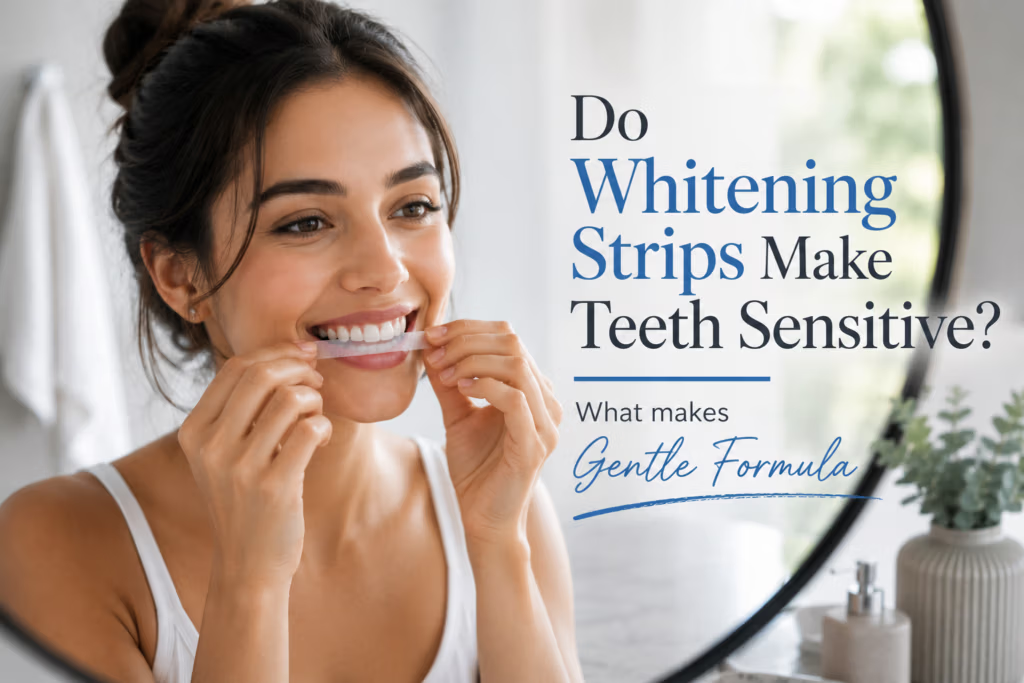
You buy the strips off Amazon, follow the instructions to a T, and have a whiter smile in a week. All well until the third day. You take a bite out of your morning toast, and suddenly there’s a sharp twinge in your tooth. That’s a real problem. That’s the kind of sensitivity that makes you think twice before your next coffee sip.
The next question that pops up is “Do whitening strips make teeth sensitive?” Yes, they do. Many whitening strips contain peroxide-based ingredients that will penetrate the tooth for a short period of time to break down stains. This can cause temporary sensitivity and, for some, irritation of the inner lining of the tooth.
EverBlanc‘s not as hardy. This formula is designed to work well in removing stains and also help to minimize the sensitivity some people have with whitening.
Why Do Bleaching Strips Hurt
Enamel is solid-looking, but it is not.
Under a microscope, it is full of tiny channels called dentinal tubules, running right down to the nerve center of your tooth.
Conventional whitening strips rely on hydrogen peroxide for quick stain removal. However, this peroxide penetrates deeper than just the surface, moving through tiny channels in the tooth.
When it reaches the nerve, inflammation occurs. That’s the sharp electric feeling people experience when they bite into ice cream mid-treatment.
Ask a hygienist, “Why do whitening strips make teeth sensitive,” and you’ll hear the same answer every time:
-
Higher peroxide concentration means faster whitening, and deeper nerve exposure
-
Longer wear time increases contact with already-sensitive tissue
-
Thin or worn enamel lets peroxide travel through faster
-
Gum recession exposes more dentin from the start
None of that is user error. It’s baked into the chemistry, full stop.
A study published in the Journal of Dentistry confirms that traditional hydrogen peroxide whitening treatments temporarily alter enamel permeability. This allows the bleaching agent to reach the pulp chamber, triggering transient inflammation in the tooth’s nerve center.
Unlike peroxide, EverBlanc uses phthalimidoperoxycaproic acid / PAP, a non-oxidizing whitening alternative. Clinical trials show that PAP reacts exclusively with surface-level organic stains. Because it does not break down into free radicals that penetrate the enamel matrix, it successfully brightens the smile without disturbing the underlying dentin layer or exposing the nerve pathways.
EverBlanc skips the trade-off. The non-peroxide formula goes after surface stains, coffee, tea, and smoking residue and stops there. It never touches the dentin layer where nerves live.
Dentists have known this mechanism for years. It’s not new science. Most drugstore brands just leave it off the box.
That’s the gap teeth whitening no sensitivity formulas exist to close.
Reading Teeth Whitening For Sensitive Teeth Reviews the Right Way
When scanning teeth-whitening for sensitive teeth reviews, skip the stars and look for verified, firsthand experiences. On our third-party verified review boards, real EverBlanc users highlight this daily comfort
-
Adam reported zero toothaches after his full 21-Day Complete Ritual
-
Ketty flagged fast delivery and strips that stayed put during application, no slipping or gaps
-
Zaynab noted firm grip alignment: the strip actually contoured to her teeth instead of sliding around
Genuine teeth whitening for sensitive teeth reviews talk about daily comfort, not just the final shade. That’s the tell.
Cross-check a handful of teeth whitening for sensitive teeth reviews across different sites before trusting any single one. Patterns beat a single glowing post every time.
If a review skips gum feel, application texture, or nerve response entirely, treat it as incomplete.
What Actually Matters for Teeth Whitening No Sensitivity Setups
Forget the marketing copy for a second. Here’s what separates a safe formula from a harsh one:
-
Ingredient list: peroxide-free formulas don’t dry out enamel’s protective structure
-
Pacing: gradual claims beat overnight promises, because fast results usually mean harsher chemical concentrations
-
Application duration: shorter, controlled contact time cuts the risk of nerve irritation
-
Transparency: honest brands name exactly what lifts stains instead of hiding behind vague terms
EverBlanc’s shade improvement, up to eight shades brighter, happens across a full ritual timeline, not a single aggressive session.
That pacing matters. Enamel needs time to remineralize between applications. Rush it, and you’re right back to asking, “Do whitening strips make teeth sensitive?” after one use.
A real teeth whitening no sensitivity setup treats time as part of the safety equation. Not just the ingredients.
Daily Application: Apply, Relax, Reveal
A real teeth whitening no sensitivity routine only works if you follow it right. Two minutes. Three steps.
-
Apply: press the strip along the gumline and smooth it flat against each tooth
-
Relax: skip eating or drinking for the recommended window so the ingredients aren’t diluted
-
Reveal: peel off, rinse lightly, check your shade in natural light instead of a harsh bathroom bulb
Tracking Shade Improvement Safely
Photograph your teeth on day one, same lighting every time. Compare weekly, not daily. Real change builds slowly.
The 14-Day Starter Ritual suits subtle stain control. The 21-Day Complete Ritual goes after deeper, years-long buildup from coffee or tea.
Keeping Your Coffee Habit and Your Enamel
You don’t have to sacrifice your morning routine. EverBlanc is built for people who drink coffee daily and still want a brighter smile. A few habits keep results locked in:
-
Rinse with water right after dark beverages like coffee or tea
-
Wait thirty minutes before brushing, giving saliva time to buffer acid first
-
Stick to occasional touch-up strips instead of full restarts
>Skip the aggressive retreatment. They wear enamel down faster than they whiten it.
Ready for Results That Don’t Hurt?
Stop wondering if whitening strips make teeth sensitive. Start seeing progress that doesn’t come with a wince. If you’ve been hunting for a real teeth whitening no sensitivity option, this is it.
Use code FIRSTSMILE at checkout for a discount on your first order, plus free delivery. No peroxide. No nerve zings. Just steady brightening.
Frequently Asked Questions
Individuals curious about whether “do whitening strips make teeth sensitive?” often have several particular concerns. Here are clear answers to those questions.
Do whitening strips make teeth sensitive every time?
Not with every formula. Sensitivity comes from peroxide reaching nerve endings through dentinal tubules. Non-peroxide options like EverBlanc skip that pathway entirely.
Will EverBlanc irritate my gums?
While traditional peroxide strips can burn soft gum tissue upon contact, EverBlanc’s non-peroxide formula is designed to be biocompatible and gentle on oral mucosa. In our clinical consumer trials, 0% of participants reported chemical gum irritation when the strips were applied correctly along the enamel surface.
How long until I see results?
Most users notice visible brightening within the first week. Full shade transformation, up to eight shades, typically finishes by day 14 or 21.
Is this safe for daily coffee or tea drinkers?
Yes. EverBlanc is built specifically to lift daily beverage stains. No need to change your coffee or tea habits.
What if my teeth are already sensitive?
That’s exactly who this formula was built for. Skipping peroxide means skipping the dentin exposure behind most sensitivity complaints.
How do I maintain results long-term?
Light touch-up applications every few weeks. No need for repeated aggressive bleaching cycles that wear enamel down over time.