We’ve all had our time of realising that our smile isn’t as white as we had hoped it to be. The common instinct is to look out for the fastest solution. But with a haste for a shine, we get baffled.
We naturally tend to be suspicious of trying anything new. So it is not surprising when we ask ourselves, ‘Are whitening strips safe for enamel?’
The silver lining? Getting teeth whitening without damaging enamel is NOT a myth. It’s merely about setting aside the “more is better” attitude and getting on with the right approach.
Table of Content
Understanding Enamel: The Shield You Can’t Replace
Before we talk about strips, we have to talk about enamel. Think of it as your smile’s personal suit of armour. It’s the hardest substance in the human body, designed to protect the sensitive dentin inside from everything you throw at it.
The catch? Enamel doesn’t have living cells, which means it can’t regrow. Once it’s thinned out by harsh acids or over-whitening, it’s gone for good.
This is why “DIY hacks” like scrubbing with charcoal or lemon juice are so dangerous; they’re essentially sanding down your shield. Proper whitening strips safe for enamel work differently. They lift the stains out of the microscopic pores of the tooth rather than stripping the surface away.
Choosing the Right Teeth Whitening Treatment UK for Your Teeth
If you’re looking for strips for teeth whitening without damaging enamel, you’ve probably noticed the massive price gap on the high street. You can find boxes for £10 or premium kits for £40 online. The variation in teeth whitening strips price often reflects formulation safety and consistency rather than just whitening strength.
In the UK, regulations are strict. Any product sold directly to you can’t contain more than 0.1% hydrogen peroxide. To bypass this and still get results, some “budget” brands use highly acidic formulas to etch the tooth.
This is where the teeth whitening treatment UK market becomes important to understand. A slightly higher price point often means you’re paying for a formula that prioritises safety and consistency over harsh whitening.
Pre-Whitening: Setting the Stage
You wouldn’t paint a wall without sanding and priming it first, and whitening is no different.
The “Clean Slate” Rule: Avoid whitening immediately after brushing with fluoride toothpaste. Fluoride is great for protection, but it can create a barrier that prevents the whitening gel from reaching the stains. Wait at least 30 minutes.
The Dry Tooth Trick: Use a clean tissue to dry your teeth before applying the strip. Most strips slide around because of saliva; a dry surface ensures the gel stays exactly where it needs to be.
Check for “Work”: Remember, strips won’t whiten crowns, veneers, or white fillings. If you have dental work on your front teeth, talk to your dentist first to avoid an uneven “two-tone” smile.
This small preparation step is often what separates successful whitening from inconsistent results when aiming for teeth whitening without damaging enamel.
The Right Way to Apply Teeth Whitening Treatment
The most common mistake? Thinking that leaving a strip on for an hour instead of 30 minutes will make your teeth twice as white. It won’t. It will just dehydrate your teeth and irritate your nerves.
- Avoid the Gums: Peroxide and other whitening agents are for teeth, not soft tissues. If the strip touches your gums, it can cause “blanching” those temporary white, sore spots. If the strips are too wide for your teeth, don’t be afraid to trim them with scissors before peeling.
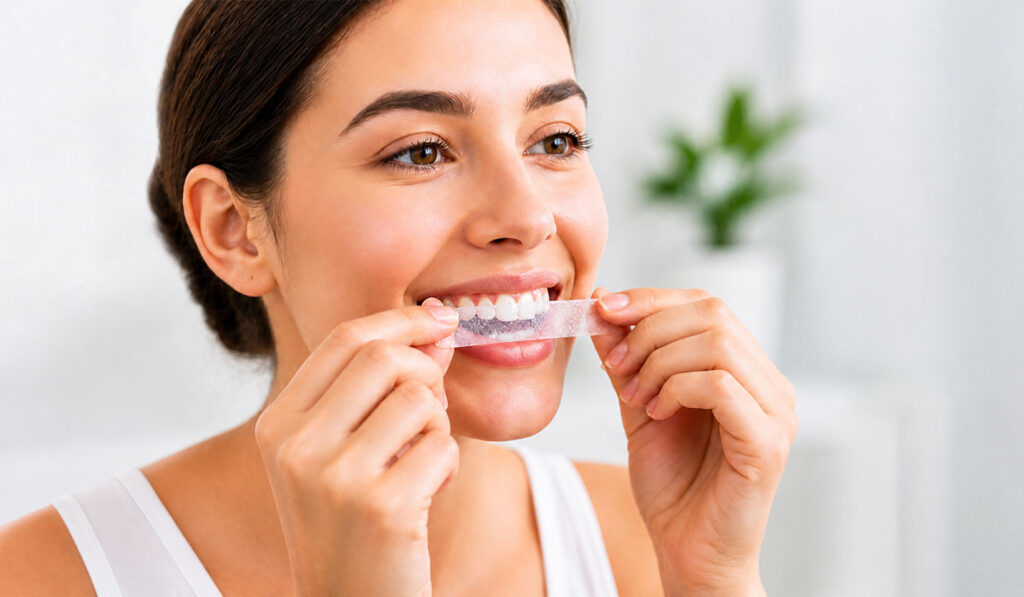
Fold, Don’t Force: Press the strip firmly against the front of your teeth and then fold the excess over the back. Use a mirror to make sure the gel is tucked into the gaps between your teeth for an even finish.
Stick to the Clock: If the box says 30 minutes, set a timer. Overuse is the fastest way to move away from teeth whitening without damaging enamel.
Bottom Line
Now you know that a bright smile doesn’t have to mean ruined enamel or sharp sensitivity. By choosing right treatment, you keep your teeth strong while getting the results you want. It’s about a consistent, safe routine that delivers a healthy glow without the pain.
At the end of the day, a white smile shouldn’t come at the cost of your dental health. EverBlanc was designed to bridge the gap between “high-street cheap” and “dentist-chair expensive”. By focusing on a formula that prioritises teeth whitening without damaging enamel, we’ve made it possible to get professional results from your sofa.
If you’re ready to brighten your smile without the “zingers”, explore the EverBlanc range today. It’s the smarter, safer way to glow.
FAQs
How can I whiten without hurting my enamel?
It comes down to the ingredients. Avoid acidic formulas that etch the surface. Use PAP-based strips instead. This non-invasive agent oxidises stains without thinning your enamel. Just follow the timing on the box to keep your teeth protected.
Can I whiten if my enamel is already thin?
Yes, but skip the peroxide. Stick to peroxide-free strips designed to lift stains without attacking the tooth structure. Using a remineralising toothpaste alongside your treatment will also help strengthen your teeth while they brighten.
Do whitening strips cause permanent damage?
Not when used correctly. Problems usually start if you leave strips on too long or use low-quality products. If you stick to enamel-safe formulas and follow the instructions, you can safely remove stains without structural harm.
How often should I use teeth whitening strips?
Start with one full 21-day course to reach your desired shade. After that, you don’t need to repeat the full treatment immediately. For maintenance, use the strips 2–3 times a week if you regularly consume staining foods or drinks like coffee or tea. If not, once a week is usually enough to maintain your results.